

Lower back discomfort rarely arrives out of nowhere. It builds quietly, day after day, as the spine absorbs long sitting, long standing, rushed lifting, poor sleep, low activity, and steady stress. Small, repeatable habits tend to change the story more than dramatic fixes.
Public health data shows how common the problem has become. The World Health Organization estimates that 619 million people lived with low back pain in 2020, with projections rising to 843 million by 2050.
In the United States, national survey data from 2019 found that 39.0% of adults reported back pain during the prior 3 months.
Today, we prepared a practical, habit-based plan. Every idea fits into normal days. None require special gear. All aim to lower flare-ups, raise tolerance for work and daily life, and clarify when discomfort needs medical evaluation.
Start With a Useful Mental Model
Lower back discomfort often behaves like an irritability problem. Tissues may be sensitive, overloaded, or deconditioned.
The nervous system amplifies signals. Sleep, stress, and how much you moved earlier can change how a familiar task feels later.
Around 90% of cases fall into a non-specific category, meaning no single structural cause explains symptoms.
That does not mean pain feels imaginary. It means daily management usually matters more than chasing a perfect diagnosis.
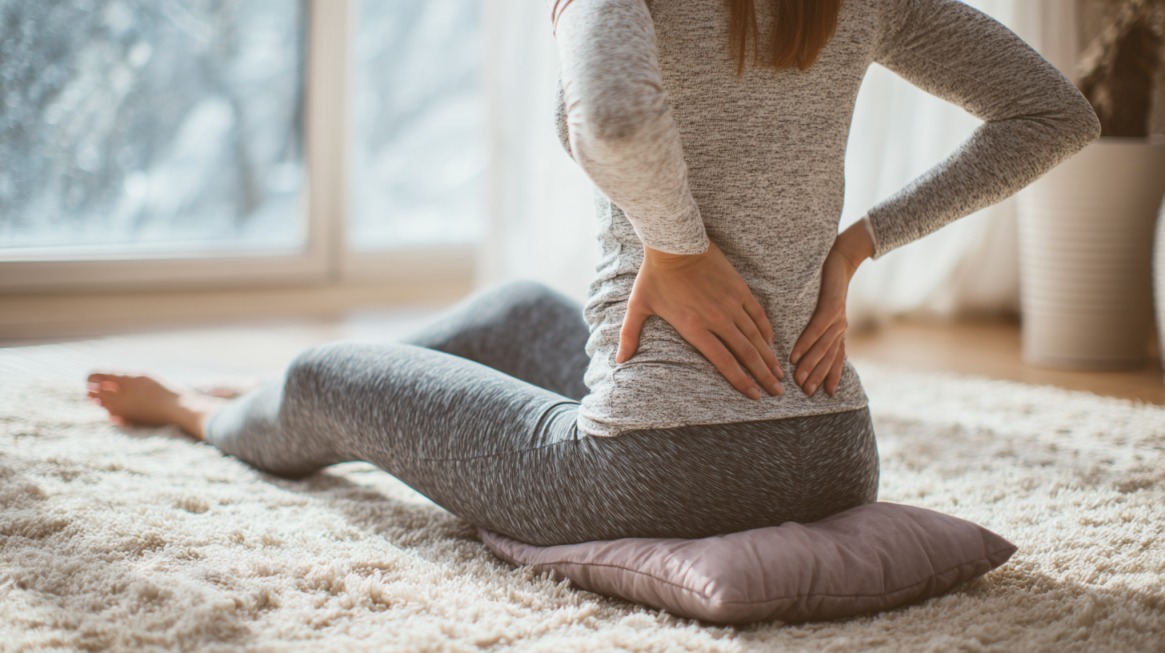
Why Guidelines Keep Repeating the Same Advice
- Keep moving and return to daily activities as tolerated.
- Start with non-drug strategies for most acute episodes, such as heat, massage, spinal manipulation, acupuncture, and movement.
- For chronic primary low back pain, combine education and self-care, exercise, selected physical therapies, psychological therapies such as CBT, and medicines when appropriate.
Daily habits matter because repeated inputs shape symptoms more than one dramatic event.
Habit 1: Move More Often, Not Harder
Frequency beats intensity for most backs. One long workout rarely offsets many hours in a single posture.
Public health guidance supports regular activity, with at least 150 minutes per week of moderate-intensity activity plus muscle-strengthening work on 2 or more days.
- Walk for 1 to 3 minutes after any 30 to 60 minutes of sitting.
- If standing is part of your job, rotate between standing, leaning, and sitting.
- Use stairs once or twice per day.
- Park farther away.
- Take phone calls while walking.
The goal is not chasing pain. The goal is cutting long blocks of static posture.

Habit 2: Avoid Prolonged Standing in One Place and Prolonged Sitting in One Place
Static anything irritates backs. Evidence reviews show prolonged standing at work increases risk of low back pain.
Dynamic movement reduces risk. Tools such as sit-stand desks, adjustable chairs, floor mats, and shoe inserts often help.
- Treat a standing desk as a position option, not a requirement.
- Unlock knees while standing and shift weight.
- Use a footrest or a low box to alternate one foot up for 1 to 2 minutes, then switch.
- Schedule short walking laps during long standing tasks.
Habit 3: Build Trunk and Hip Strength Twice per Week
Strength work is about endurance and control around trunk, hips, and upper legs. Evidence summaries support exercise programs for chronic low back pain.
- Hip hinge practice, 2 sets of 8 to 10 reps.
- Glute bridge, 2 to 3 sets of 8 to 12.
- Bird-dog, 2 sets of 6 to 8 per side.
- Side plank, modified if needed, 2 sets of 15 to 30 seconds per side.
- Split squat or step-up, 2 sets of 6 to 10 per side.
Guidelines for progress:
- Mild discomfort during or after can be normal.
- Sharp worsening signals a stop.
- Keep motion smooth and stop 2 reps before form breaks.
- Increase volume slowly.
Habit 4: Use Stretching as a Targeted Tool
Stretching helps when it targets stiff areas that load the back, usually hips and upper back. Random aggressive stretching often irritates symptoms.
- Hip flexor stretch, 30 to 45 seconds per side.
- Hamstring stretch, 20 to 30 seconds per side, gentle.
- Thoracic rotation, 6 reps per side.
If stretching worsens symptoms, switch to walking and gentle mobility for 1 week, then test again.
Habit 5: Adjust the Workstation
A workstation that forces one posture for hours overrides good exercise habits.
- Screen top near eye level.
- Keyboard and mouse close, elbows near sides.
- Chair height so feet rest on the floor, knees near hip level or slightly below.
- A small lumbar support or rolled towel can reduce slumping.
Laptop users benefit from separating screen from keyboard by adding a simple stand plus external keyboard and mouse.
Habit 6: Drop Bed Rest as a Strategy
For typical low back pain, prolonged rest often backfires by reducing tolerance for movement. Staying active and continuing daily activities works better.
- Take 2 to 3 short walks.
- Use gentle mobility.
- Apply heat for stiffness.
- Choose an earlier bedtime.

Habit 7: Use Heat and Ice Strategically
Heat and ice help lower pain enough to allow movement. Many people also use massage in Austin to ease muscle guarding and stiffness before returning to daily activities.
- Ice can reduce short-term pain and swelling sensations after strain.
- Heat often eases stiffness and muscle spasm feelings.
Both appear in self-care guidance. Superficial heat shows moderate evidence for acute or subacute low back pain.
- Ice for 10 to 15 minutes, wrapped, up to a few times daily.
- Heat for 15 to 20 minutes, especially before walking or mobility.
Habit 8: Lift and Carry With Less Drama
Repeatable mechanics reduce load spikes.
- Get close to the object.
- Brace lightly by exhaling, then tightening midsection.
- Hinge at hips and knees.
- Avoid twisting while loaded, pivot feet instead.
- Break loads into smaller trips.
Rotate tasks when possible. Repetition plus fatigue often sets up flare-ups.
Habit 9: Fix Sleep Setup First
View this post on Instagram
Back discomfort and poor sleep amplify each other.
- Back sleepers benefit from a pillow under knees to support the lumbar curve.
- Side sleepers benefit from a pillow between knees with knees slightly bent.
- Stomach sleepers strain the back more, and a pillow under hips or lower stomach can reduce the load.
Position changes take minutes yet protect the spine for hours.
Habit 10: Use Pacing and the Idea That Hurt Does Not Equal Harm
Pain can feel intense even when movement remains safe. Guidance highlights the message that hurt does not equal harm and supports staying active to return to valued activities.
- Pick a baseline you can manage on a bad day.
- Hold that level daily for 7 days.
- Add a small amount weekly.
- On flare-up days, reduce volume by 20% to 30%, not to zero.
Habit 11: Treat Stress as a Physical Input
Stress alters muscle tension, sleep, and pain sensitivity. Psychological therapies such as CBT appear among recommended non-surgical options for chronic primary low back pain.
- 5 minutes of slow breathing after lunch or before bed.
- A short walk after work to downshift.
- For persistent pain anxiety, structured CBT with a clinician can help more than self-directed efforts.
Habit 12: Know When Self-Care Stops and Medical Help Starts

Some symptoms require evaluation rather than home management. Warning signs include numbness around genitals or buttocks, difficulty urinating, loss of bladder or bowel control, significant leg weakness, numbness in both legs, high temperature, unexplained weight loss, pain worse at night, or symptoms after a serious accident.
A simple rule: escalating or spreading symptoms, or changes in bladder or bowel function, call for medical care.
Find out more: What health essentials should everyone keep at home at all times?
A Daily Habit Menu
Use the table as a pick list. Pick 4 to 6 habits and run them for 3 weeks.
| Habit | Why it helps | What to do | Time cost | Notes |
| Movement breaks | Reduces static loading | Walk 1 to 3 minutes each hour | 10 to 20 minutes/day | Pair with water refills |
| Weekly aerobic base | Improves tolerance and health | Work toward 150 minutes/week | 150 minutes/week | Public health baseline targets |
| Strength 2x/week | Supports trunk and hips | 5 exercises, moderate effort | 30 to 45 minutes/session | Progress slowly |
| Heat for stiffness | Lowers pain enough to move | Heat 15 to 20 minutes | 15 to 40 minutes/day | Superficial heat supported for acute/subacute |
| Workstation tweaks | Reduces daily irritation | Screen up, tools closer | 10 minutes once | Re-check monthly |
| Sit-stand alternation | Avoids static standing and sitting | Rotate postures | Ongoing | Dynamic movement favored |
| Sleep positioning | Protects spine for hours | Knee pillow or under-knee pillow | 2 minutes | Positioning guidance |
| Pacing rule | Prevents boom-bust cycles | Cut volume 20% on flare days | Ongoing | Keep the baseline |
| Stress downshift | Lowers pain sensitivity | Breathing or short walk | 5 to 15 minutes/day | Psychological therapies supported |
Example Routine for a Desk Job
Morning, 5 to 10 minutes
- 2 minutes gentle hip mobility.
- 5-minute walk or stairs.
Workday
- Stand and walk 2 minutes each hour.
- Lunch, 10-minute walk at easy pace.
- If using a standing desk, rotate 20 to 40 minutes standing with sitting.
Evening, 15 to 30 minutes
- 20-minute walk or light cardio.
- If stiff, heat for 15 minutes, then a short walk.
- Sleep with knee pillow or under-knee pillow.

What to Expect With Consistency
Week 1 may include fluctuations. That does not signal failure. Weeks 2 to 4 often bring fewer spikes and better tolerance for sitting, standing, and walking. Strength and aerobic gains usually appear after 4 to 8 weeks.
Evidence summaries note that many interventions deliver small-to-moderate short-term pain improvements, and function gains can lag behind pain changes. Aim for steadier days and fewer flare-ups rather than perfect zero pain.